
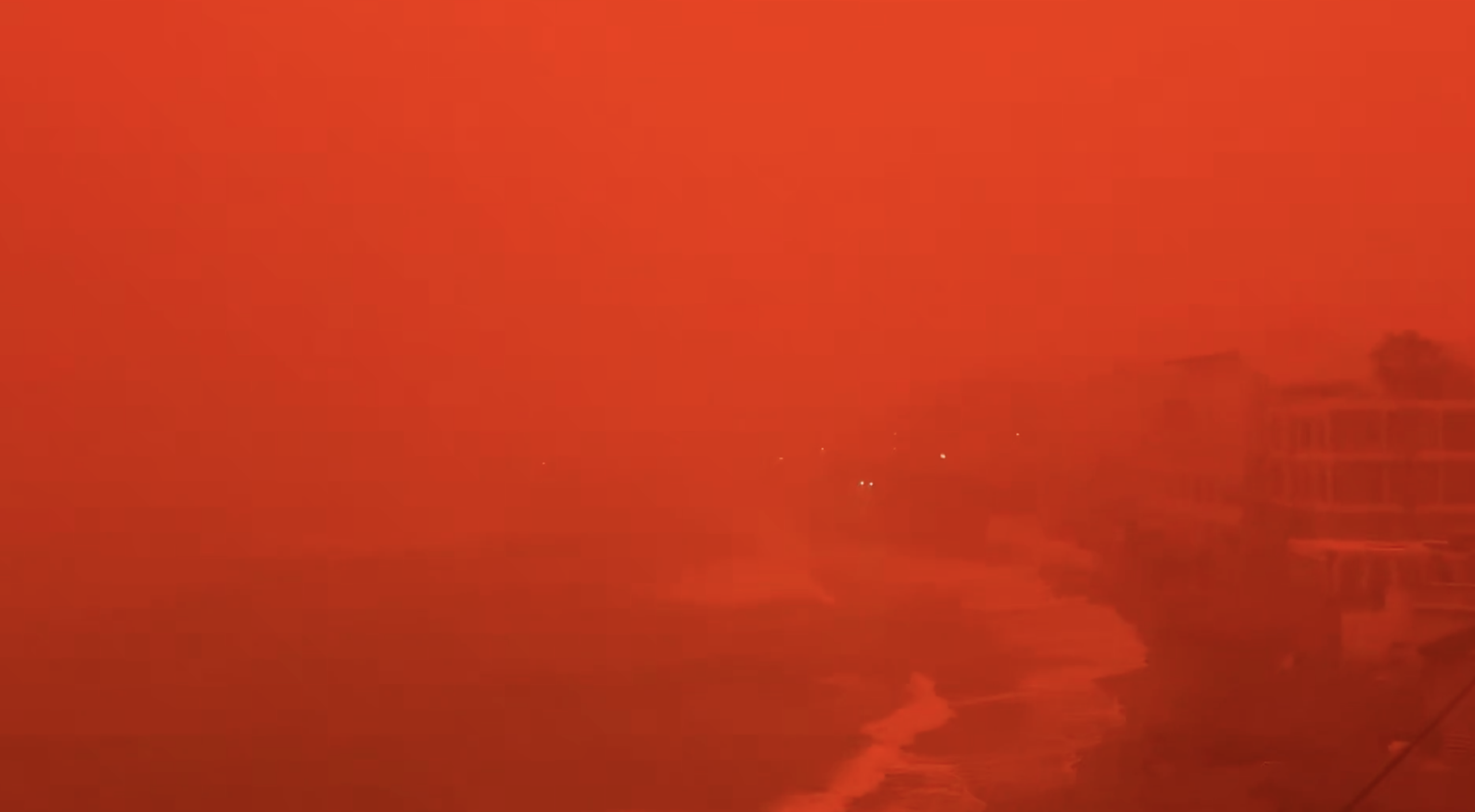
A blood-red sky blanketed parts of Crete, Greece, on the afternoon of April 1, 2026, as a massive plume of Saharan dust swept across the island, creating an eerie, apocalyptic scene that residents rushed to capture on video. Thick clouds of fine red dust, carried by strong sirocco winds from Libya and Egypt, transformed the daylight into a deep crimson hue, with visibility dropping dramatically in some areas. Social media filled with striking footage showing the sky glowing blood-red, turning ordinary landscapes into something resembling a science-fiction film or a Martian sunset.
Saharan Dust Meets Storm Erminio
The dramatic event formed part of a larger weather system named Storm Erminio, which brought heavy rainfall, thunderstorms, hail, and locally gale-force winds exceeding 100 km/h (about 62 mph) to much of Greece on April 1-2. The African dust intensified around midday on Wednesday, particularly affecting southern regions including Crete, the Peloponnese, the Cyclades, and the Dodecanese islands.
Dust concentrations reached extremely high levels in places—reportedly topping 1,000 micrograms per cubic meter in southern Crete—leading to very poor air quality. Authorities issued warnings, urging residents, especially those with respiratory issues, to limit outdoor activity, stay indoors where possible, and exercise caution while driving. The phenomenon coincided with other severe weather impacts on the island: flights were disrupted or diverted at Heraklion airport, and a localized tornado in the Ierapetra area overturned a truck and damaged greenhouses in Pachia Ammos. Muddy “blood rain”—rain mixed with the iron-rich Saharan particles—is also expected in affected zones.
Why Does the Sky Turn Blood Red?
Saharan dust events are not uncommon in the Mediterranean, especially in spring when certain wind patterns loft fine sand and silt particles high into the atmosphere and transport them northward across the sea. The dust contains iron oxides that preferentially scatter shorter blue wavelengths of light while allowing longer red ones to dominate, resulting in the distinctive orange-to-crimson skies and sunsets. When mixed with moisture from approaching storms, it can produce the “muddy rain” effect seen in previous episodes across Greece and southern Europe.
Greece’s National Meteorological Service (EMY) and air quality monitors like AtmoHub had forecasted the dust transport accompanying the stormy weather from March 31 through April 2, with southern islands like Crete experiencing the strongest impacts due to limited rainfall in some spots and proximity to the dust plume’s path.
Impacts and Safety Advice
- Air quality: Classified as hazardous in southern Crete; sensitive groups advised to remain indoors.
- Travel: Reduced visibility, strong winds, and storm activity prompted emergency alerts and restrictions on non-essential movement.
- Daily life: Schools and services faced disruptions in parts of the South Aegean, while residents documented the surreal lighting conditions indoors and out.
Similar Saharan dust episodes have periodically turned skies over Greece an eerie red or orange in past years, but the combination with Storm Erminio on April 1 made this event particularly intense and widespread across the island. As the storm system moves through, conditions are expected to improve gradually by April 2, though lingering dust and muddy precipitation may persist in southern areas.
Residents and visitors in Crete and other affected regions should continue monitoring local weather and air quality updates from official sources.This striking natural display serves as a vivid reminder of how interconnected weather systems across continents can be—turning an ordinary spring afternoon into a memorable, otherworldly spectacle.
Check out more cool stories on GlobalGreeks.com