
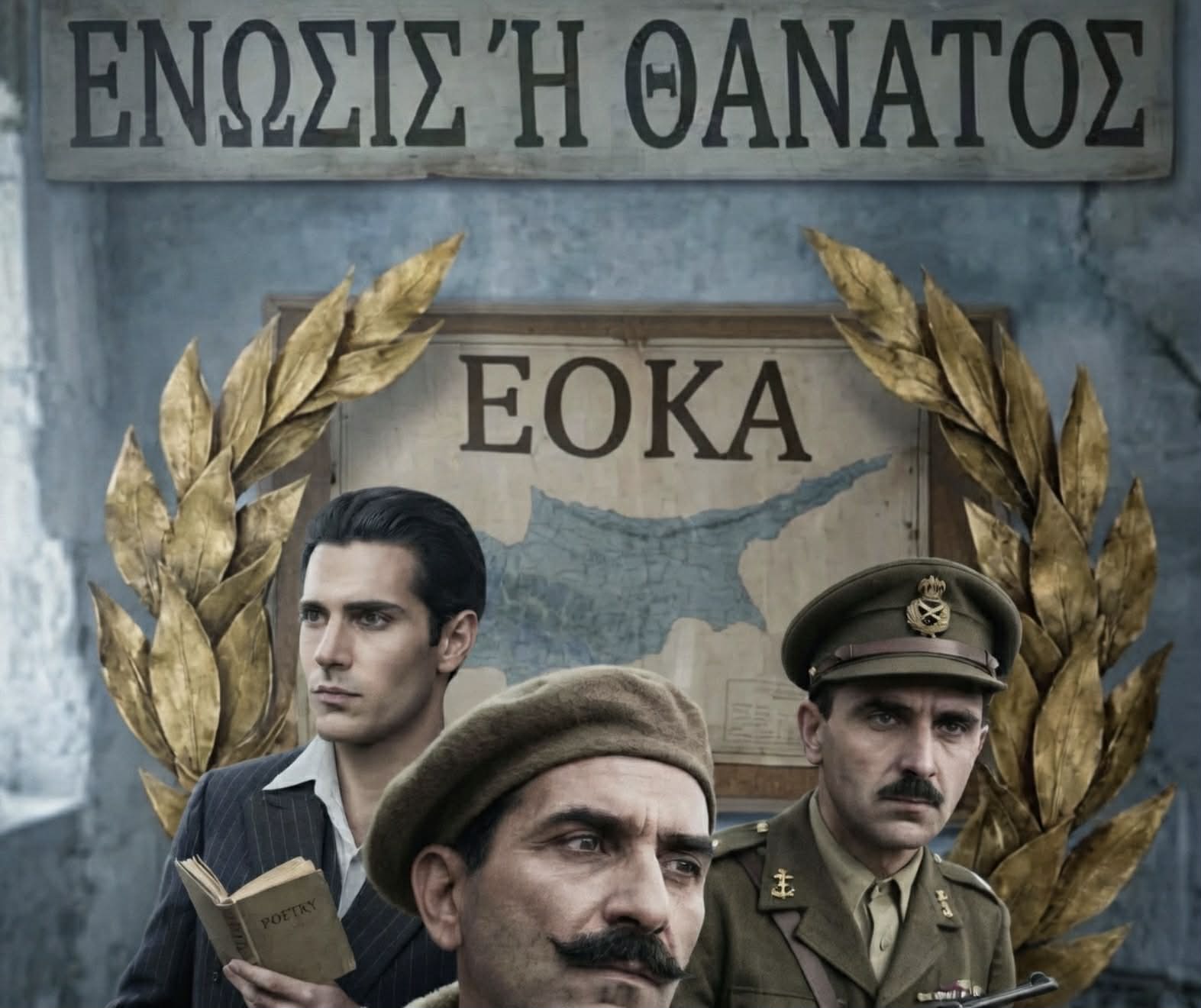
A Greek Cypriot Tribute to the EOKA Heroes
Imagine the night of March 31 turning into April 1, 1955. Under a starlit Cypriot sky, young patriots—armed with little more than homemade bombs, unbreakable will, and a burning dream of enosis—struck simultaneously across the island. Explosions rocked British police stations in Nicosia, Famagusta, and Limassol. A power station went dark.
The British radio transmitter in the Troodos Mountains fell silent. Leaflets rained down like fire: the National Organization of Cypriot Fighters (EOKA) had officially launched its armed liberation struggle.
This wasn’t random violence. This was the thunderclap of a people who had waited too long. For Greek Cypriots, April 1 marks the sacred anniversary of our national awakening—the day ordinary men and women became legends in the fight against British colonial rule. As we celebrate the 71st anniversary today in 2026, the pride still burns bright in every school assembly, every memorial wreath, and every heartbeat that remembers: Freedom isn’t given. It’s taken.
The Spark: Why We Rose Up
Cyprus had suffered under the British yoke since 1878—decades of foreign administration that treated our ancient Hellenic soul like just another colony. Churches rang with the cry for enosis—union with mother Greece. In 1950, a plebiscite showed 95.7% of Greek Cypriots demanding self-determination. Diplomatic pleas fell on deaf ears in London. Archbishop Makarios III, the spiritual and political heart of the movement, and Colonel Georgios Grivas (nom de guerre: Digenis), the military genius, knew words alone wouldn’t free us.
So EOKA was born in secrecy. On that historic April night, the organization declared: “With the help of God, the nation, and the soul of our ancestors, we take up arms.” One fighter, Modestos Panteli, tragically died in preparations—an electric shock during wiring—but his sacrifice became the first drop of blood in a river that would flow for four years. The struggle wasn’t about hatred; it was about dignity. EOKA fighters swore an oath that still echoes in our collective memory:
“I swear by the Holy Trinity that I shall struggle with all my powers for the liberation of Cyprus from the English yoke, sacrificing even my life… I shall obey absolutely the orders of the Leader of the Organization and only his.”
Heroes in the Shadows: The Men and Women Who Lit the Flame
Picture this: Grigoris Afxentiou, the “Eagle of Machairas,” fighting to his last breath in a cave, refusing surrender even as British forces set the mountain ablaze around him. Kyriakos Matsis, Evagoras Pallikaridis, and dozens more—teenagers, teachers, priests—who left schoolbooks and plows to become guerrillas in the mountains and cities.
They were outnumbered, outgunned, but never outmatched in spirit.From a Greek Cypriot lens, this was never “terrorism.” It was a classic anti-colonial revolution, like the American patriots against the British crown or the Greeks in 1821. EOKA targeted military and colonial installations with surgical precision. They disrupted an empire. They forced the world to notice tiny Cyprus demanding its rights.
The Legacy: From Struggle to Sovereignty
The four-year campaign—marked by ambushes, mountain hideouts, and unbreakable civilian support—didn’t deliver full enosis. But it delivered something greater: the end of British rule. The 1959 Zurich-London Agreements birthed the independent Republic of Cyprus in 1960. We stood as a free nation because of EOKA’s blood and sacrifice.
Today, the Republic of Cyprus officially honors April 1 as our National Anniversary. Schools hold doxologies. Streets fill with parades of proud youth in blue-and-white. Officials lay wreaths at memorials to the fallen. Ministers call it “a glorious revolutionary period” and “an epic of unity and courage.”
It’s woven into our identity. Greek Cypriot children grow up learning the names of the heroes. Families gather to share stories of uncles who hid fighters or mothers who smuggled messages. In diaspora communities—from Astoria, New York, to London and Melbourne—commemorations keep the flame alive with poetry, music, and tears of pride.
Why This Day Still Matters in 2026
Seventy-one years later, the world has changed, but the message hasn’t. April 1 reminds every Greek Cypriot that when justice is denied, a people united can move mountains—literally and figuratively. It’s not about revisiting old wounds; it’s about celebrating the unbreakable spirit of Cypriot Hellenism. EOKA taught us that freedom has a price, and dignity is worth paying it.So today, raise a glass (or light a candle) to Digenis, Makarios, Afxentiou, and every unnamed fighter who whispered “Eleftheria i Thanatos” (Freedom or Death) in the face of empire. The struggle of 1955 wasn’t just history—it’s the reason Cyprus stands proud today.
Happy April 1, fellow Hellenes of Cyprus.
The fight was ours. The victory is eternal.
Check out more cool articles on GlobalGreeks.com
What’s your family’s EOKA story? Drop it in the comments—we honor them all.(Blog written on the 71st anniversary, April 1, 2026. Sources drawn from official Cypriot commemorations and historical records.)