
One of the most fascinating things about Kos, the Greek island in the Dodecanese known for its beaches and ancient sites, is its deep connection to the birth of Western medicine—centered around Hippocrates (c. 460–370 BC), widely regarded as the “Father of Medicine.”
Hippocrates was born and practiced on Kos. He revolutionized medicine by shifting it from superstition and divine intervention toward systematic observation, clinical diagnosis, and ethical practice. His famous Hippocratic Oath—a pledge emphasizing “do no harm,” patient confidentiality, and professional integrity—still influences modern medical ethics today (though the exact wording has evolved).
The Legendary Plane Tree of HippocratesIn the heart of Kos Town (Platanos Square, right by the harbor and the medieval Neratzia Castle), stands the iconic Plane Tree of Hippocrates (also called the Tree of Hippocrates). According to local tradition, this is where Hippocrates taught his students and examined patients under its shade more than 2,400 years ago.
The current oriental plane tree (Platanus orientalis) is “only” about 500 years old (with a massive crown spanning ~12 meters / 39 feet, making it one of Europe’s largest), but it’s widely believed to be a direct descendant of the original tree from Hippocrates’ era. Its hollowed, gnarled trunk is supported by scaffolding and fencing for preservation, yet it remains a living symbol of the island’s heritage. Legend even suggests the Apostle Paul may have taught there centuries later.
The Asclepieion: Ancient Healing Sanctuary
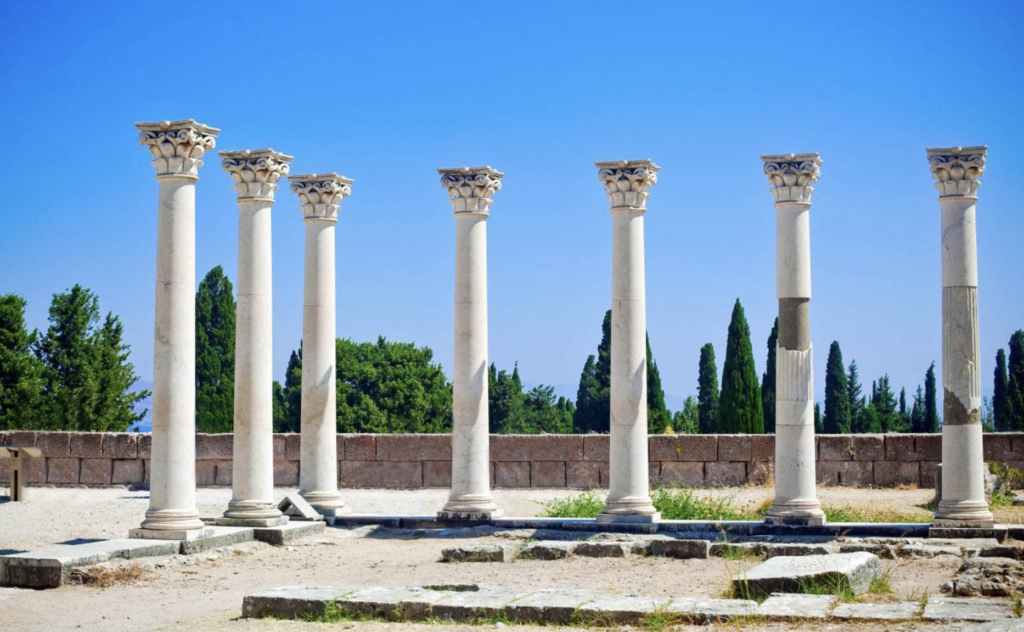
Just a few kilometers outside town lies the Asclepieion of Kos, one of the most important ancient healing centers in the Greek world. Dedicated to Asclepius (the god of medicine and healing, often depicted with a serpent-entwined staff—the origin of the modern medical symbol), this hilltop sanctuary combined temple worship, herbal treatments, hydrotherapy, and what we might call early “medical school” practices.
Hippocrates likely trained and worked here (or at a predecessor site with natural springs). Patients underwent rituals, baths, and observations, with records kept of symptoms and outcomes—foundational to evidence-based medicine. The site features impressive ruins: terraces, columns, a theater-like structure, and views over the Aegean.
Bonus Volcanic “Spa” Connection
Kos’s volcanic geology (tied to the nearby island of Nisyros) adds another layer: places like Therma Beach feature natural hot springs mixing with the sea, creating warm, mineral-rich pools right on the shore—an open-air continuation of the island’s ancient healing traditions.
Kos blends this profound historical legacy with beautiful beaches, Crusader castles (like the harbor fortress built by the Knights of St. John), and a laid-back vibe—making it feel like a living museum of medicine’s origins. If you’re ever there, sitting under that plane tree while imagining ancient lessons unfolding is an unforgettable experience.
Check out more cool articles on GlobalGreeks.com