
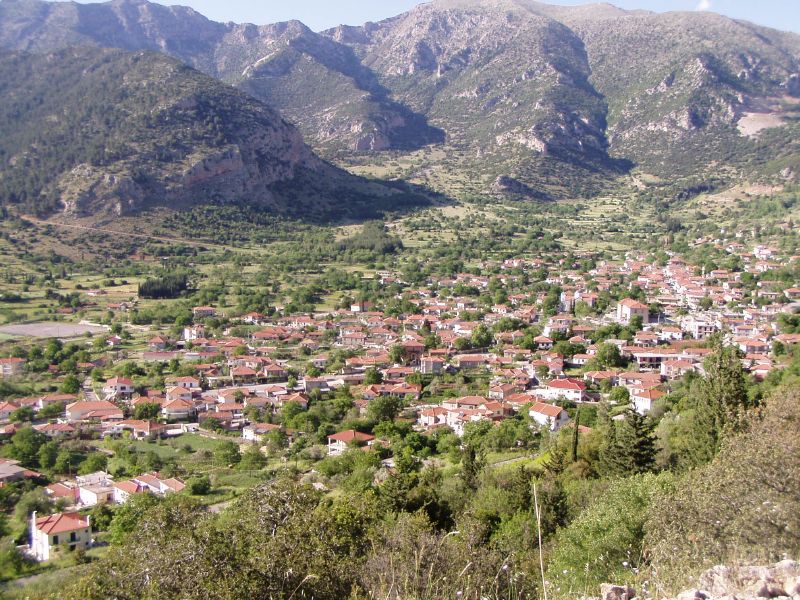
Nestled on the southern slopes of Mount Oligyrtos (also known as Skipiza), in the heart of Arcadia in the Peloponnese, lies the mountain village of Kandila (Greek: Κανδήλα). Just a short drive from Tripoli, the regional capital, this picturesque community sits at around 760–775 meters above sea level, offering stunning views over fertile plains and rugged peaks.
While Arcadia evokes images of idyllic pastoral landscapes from ancient myths—home to the god Pan and nymph-filled forests—Kandila’s own story is one of quiet resilience, agricultural roots, and a starring role in Greece’s fight for freedom.The area’s human presence stretches back centuries.
References from the ancient traveler Pausanias (around 176 AD) hint at early settlements nearby, and the broader region ties into Arcadia’s legendary past. The name “Kandila” itself may echo ancient roots, possibly linked to “Kondylaia,” an old site in the vicinity, or more poetically to the Greek word for a candle or hanging lamp (kandila or kandylaki), a motif seen in Greek traditions like roadside shrines that light the way for travelers.
The first clear historical mention of Kandila appears in a 1467 document describing the “Fields of Kandila” (Kandyliotikos Kampos)—rich, well-watered farmlands that sustained local life under Byzantine and early Ottoman rule.
By 1700, during the Venetian census of the Peloponnese, it was recorded as “Cadilla,” reflecting the era’s shifting powers.
Life in the village carried on through Ottoman times, with families tied to the land. In 1777, after the failed Orlov Revolt (a Russian-backed uprising against Ottoman rule), some residents—particularly those with the surname Sakkakos—fled to Koldere near Magnesia (in modern Turkey), carrying their stories and names abroad.Kandila truly shines in the pages of modern Greek history during the Greek War of Independence (1821).
Perched strategically amid the mountains, the village and its crown jewel—the Monastery of Panagia Kandila (Monastery of the Virgin of Kandila)—became vital to the revolution.
The monastery, dramatically built into a rock face above the village at about 873–940 meters, has origins possibly dating to the 10th century or later (tradition varies, with some sources pointing to the 17th–18th centuries).
Legend says its name comes from a miraculous candle that lit up an icon of the Virgin Mary, guiding believers to the spot. Perched high and fortified, it served as a natural fortress.
During the uprising, it transformed into a multifaceted stronghold: a safe refuge for locals and fighters, a secret supply depot for gunpowder and provisions, and even a makeshift hospital treating wounded revolutionaries. The abbot Kallinikos played a key leadership role, coordinating aid and support.
Fighters from Kandila joined battles across the Peloponnese, contributing to early victories like the fall of Tripolitsa (modern Tripoli), a turning point that boosted the rebellion.
Today, the whitewashed monastery remains visible from afar, a beacon on the mountainside with its church tucked into the rock and a nearby cave used traditionally as a natural “fridge.”
The village itself, part of the municipal unit of Levidi since administrative reforms in 1997 (and earlier under the Kapodistrias plan), has seen population shifts—from over 1,100 in the 1980s to around 540–700 in recent years—but retains its vitality.Kandila embodies Arcadia’s enduring spirit: a blend of ancient echoes, Ottoman-era endurance, revolutionary heroism, and serene mountain beauty.
Surrounded by peaks, fertile valleys, and the whispers of history, it’s a reminder that some of Greece’s most fascinating stories unfold not in grand ruins, but in quiet villages where faith, land, and liberty have intertwined for generations.
(Images: Scenic views of Kandila village and the dramatic Monastery of Panagia Kandila perched on the rocky hillside, capturing the mountainous charm and historical aura of the area.)