
In the vast, sparkling expanse of the Aegean Sea lies Kinaros (Κίναρος), a rugged little speck of land that’s as remote as it gets in the Greek islands.
With just one permanent resident, this 4.5 km² (about 1.7 square miles) islet in the Dodecanese archipelago holds the title of one of Greece’s smallest inhabited islands—though not the absolute tiniest (that honor often goes to even smaller spots like Marathi with a handful of people).
What makes Kinaros truly extraordinary isn’t its size, but the extraordinary story of resilience unfolding on its rocky shores.Named after the Greek word for artichoke (kinara), which once grew abundantly here, Kinaros sits in a strategic spot: east of Amorgos, west of Kalymnos and Leros, and about 5.5 nautical miles from the nearby islet of Levitha.
Its highest point rises to 296 meters, with steep cliffs, dry slopes dotted by carob trees, prickly pears, wild figs, and small vineyards that produce local grapes. The main (and only) access is Pnigos Bay, a narrow inlet with a small beach and a concrete dock where fishing boats tie up in summer and supply boats occasionally arrive from Amorgos.
Ancient writers like Pliny the Elder, Pomponius Mela, and Athenaeus mentioned Kinaros in their geographies, hinting at its long presence in the Mediterranean world. It joined modern Greece in 1948 after Italian rule over the Dodecanese. In the mid-20th century, small pastoral families lived here—by 1951, about 12 people tended livestock.
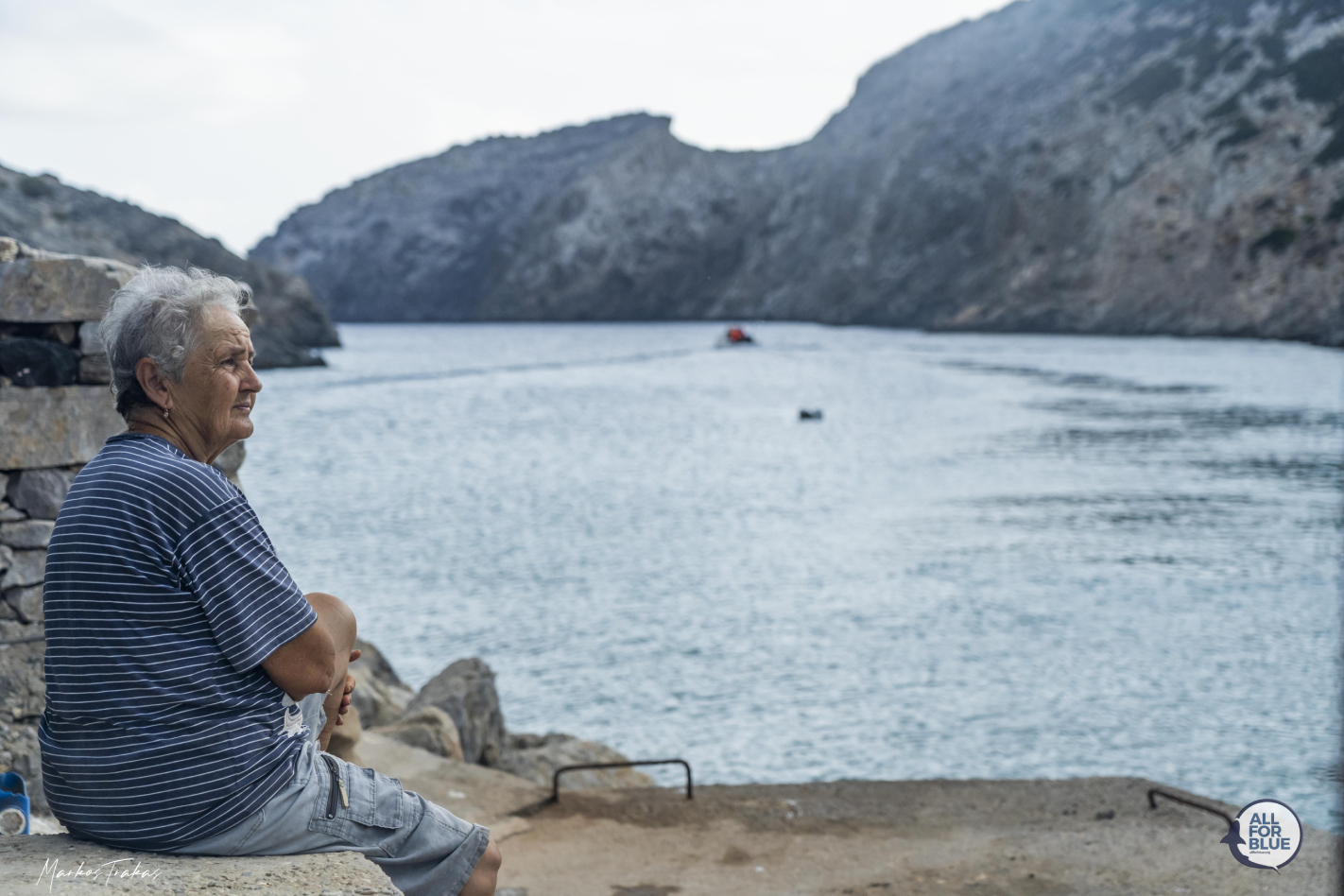
But emigration to Australia, the mainland, and beyond steadily emptied the island. The 2011 census recorded just 2 inhabitants: a couple who returned from Australia to honor family roots and raise goats and sheep.Tragically, the husband passed away in 2013. Since then, one woman has kept Kinaros alive: Irini (Rinio) Katsotourchi-Thireou, affectionately called Kyra Rinio.
Born in 1945 on nearby Amorgos to parents who once lived permanently on Kinaros, she and her husband returned decades ago to renovate the family home and fulfill her father’s dying wish. Now in her late 70s (around 80-81 as of 2026), Kyra Rinio lives alone in a modest single-room former fishermen’s café near the dock, powered by solar panels and connected via satellite phone.
Her daily life is one of quiet determination: she tends a herd of about 200 goats and sheep roaming the slopes, plus chickens and her loyal dog Shiva. Supplies arrive weekly by boat from Amorgos—when the notorious Aegean winds allow it. In winter, rough seas can isolate her for days or weeks.
No running water, no medical facilities, no regular ferries—just raw, self-sufficient island living in near-primitive conditions.Yet Kyra Rinio isn’t just surviving; she’s become a national symbol of Greek endurance and “akritic” spirit (the frontier guardians of Greece’s edges). In 2020, Greek President Katerina Sakellaropoulou visited her, and her story has inspired articles, visits from environmental groups, and even award-winning recognition—her goat ragu pasta recipe won praise at the 2023 Gastronomos Quality Awards.
She’s called the “guardian angel” of Kinaros, standing watch over this corner of Greece amid the country’s broader demographic challenges.The island itself feels timeless: an abandoned village higher up the slopes, the small church of Aghios Georgios built in 1878, a memorial to three Greek Navy personnel lost in a 2016 helicopter crash here.
In summer, occasional fishermen or day-trippers arrive by private boat, but Kinaros remains far from mass tourism—no hotels, no tavernas, just pristine nature, unique birdlife, and the sound of waves and bells from grazing animals.In an era when so many Greek islands fight depopulation, Kinaros stands as a poignant reminder: one person’s unwavering commitment can keep a place alive.
Kyra Rinio isn’t just the sole resident—she’s the heartbeat of an entire islet.Would you brave the isolation to visit or even help sustain a place like Kinaros? Share your thoughts below—what draws you to Greece’s hidden, off-the-grid gems? 