

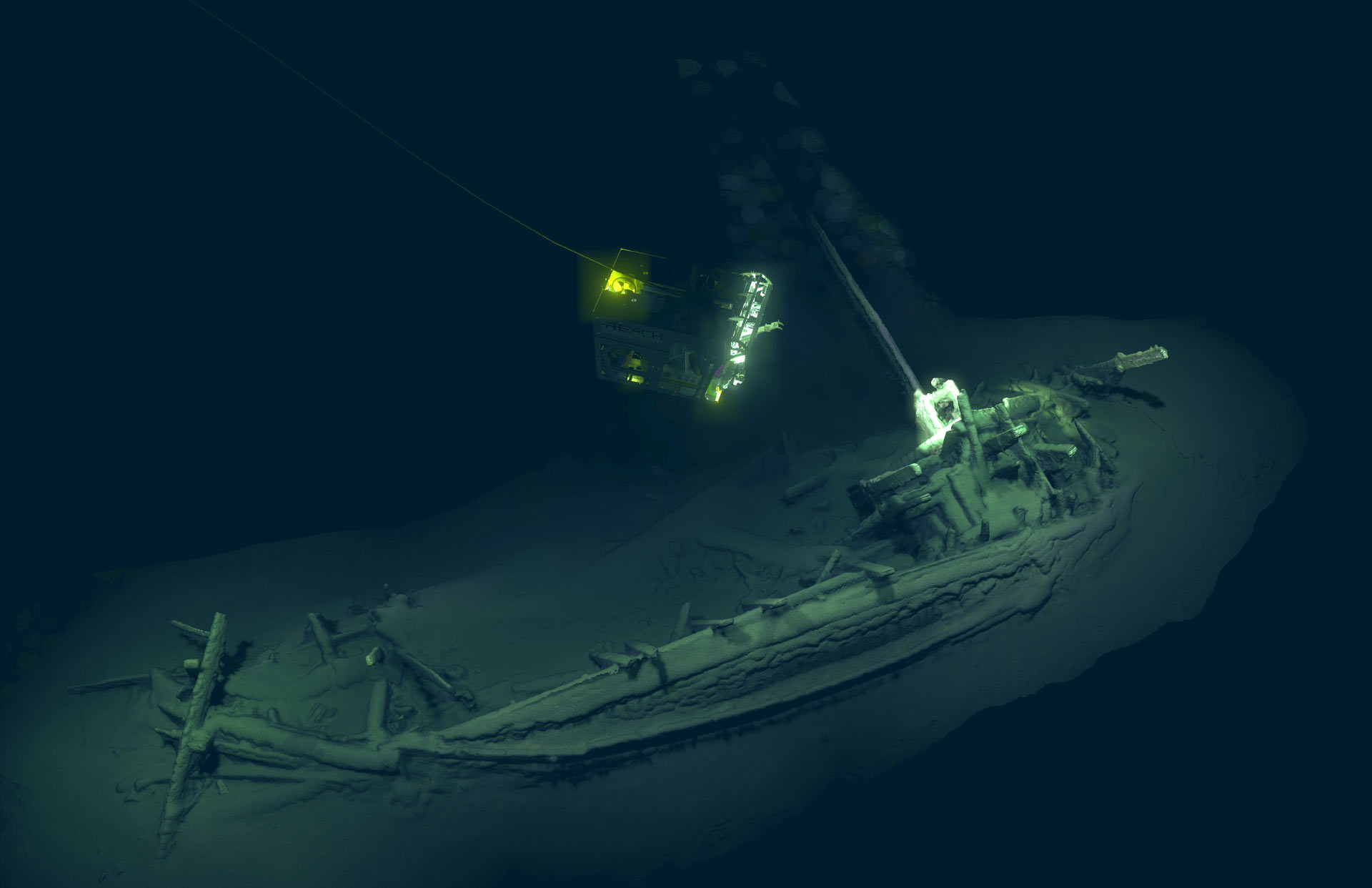
In a groundbreaking discovery that has captivated archaeologists and history enthusiasts alike, a remarkably well-preserved 2,400-year-old Greek trading vessel has been found deep beneath the waters of the Black Sea.
This extraordinary find offers a rare, almost frozen-in-time window into the maritime prowess of our ancient Greek ancestors.Measuring approximately 75 feet (23 meters) in length, the ship is now recognized as the oldest intact shipwreck ever discovered — a true marvel from the Classical period of ancient Greece.
A Vessel Preserved by Nature’s Perfect Conditions
Resting more than 2 kilometers (over 1.2 miles) below the surface in an oxygen-free, anoxic environment, the ship has been shielded from decay for more than two millennia. Without oxygen, bacteria and marine organisms that typically destroy wooden wrecks could not take hold. As a result, the vessel remains largely intact, with its mast, rudders, and even internal structural features remarkably preserved.
Professor Jon Adams, the lead researcher on the project, expressed his amazement at the find:
“A ship, surviving intact, from the Classical world, lying in over a mile of water, is something I would never have believed possible.”
This level of preservation is unprecedented and provides invaluable insights into ancient Greek shipbuilding techniques that were previously known only through artistic depictions on pottery and vases.
Part of the Landmark Black Sea Maritime Archaeology Project
The discovery was made during the Black Sea Maritime Archaeology Project (Black Sea MAP), an ambitious international effort that has so far identified more than 60 shipwrecks spanning various historical eras. These include other ancient Greek trading vessels, Roman ships laden with amphorae, and even remnants from a 17th-century Cossack fleet.
The findings underscore the Black Sea’s enduring role as a vital corridor for trade and cultural exchange, connecting Greek colonies and civilizations across Europe and Asia for thousands of years.
Rewriting Our Understanding of Ancient Seafaring
Most ancient shipwrecks are found in fragmented condition, but this near-complete Greek vessel stands as a unique example of Classical ship construction. It is already prompting scholars to rethink how ancient Greeks designed, built, and navigated their ships during the height of Hellenic civilization.Beyond shipwrecks, the project has also revealed submerged settlements, including an early Bronze Age village off the Bulgarian coast. Archaeologists uncovered remains of homes, hearths, and ceramics, shedding light on how rising sea levels reshaped ancient coastlines. Over time, the area became a bay used by Greek colonists, later seeing activity during Byzantine and Ottoman periods — highlighting the region’s deep and continuous ties to Greek history.
A Proud Chapter in Greek Maritime Legacy
For the global Greek community, this discovery is more than an archaeological triumph — it is a powerful reminder of the seafaring spirit and innovation that defined ancient Hellenic culture. From the city-states of classical Greece to the far-reaching colonies around the Black Sea, our ancestors mastered the waves and built enduring connections across the known world.This perfectly preserved trading ship stands as a tangible link to that legacy, bringing us closer than ever to the daily realities of ancient Greek mariners.
Credit: Black Sea MAP
Check out more interesting articles on GlobalGreeks.com