Athens in 1900: A Time Capsule of Greece’s Capital at the Turn of the 20th Century – What Was Life Really Like inHistorical Athens?
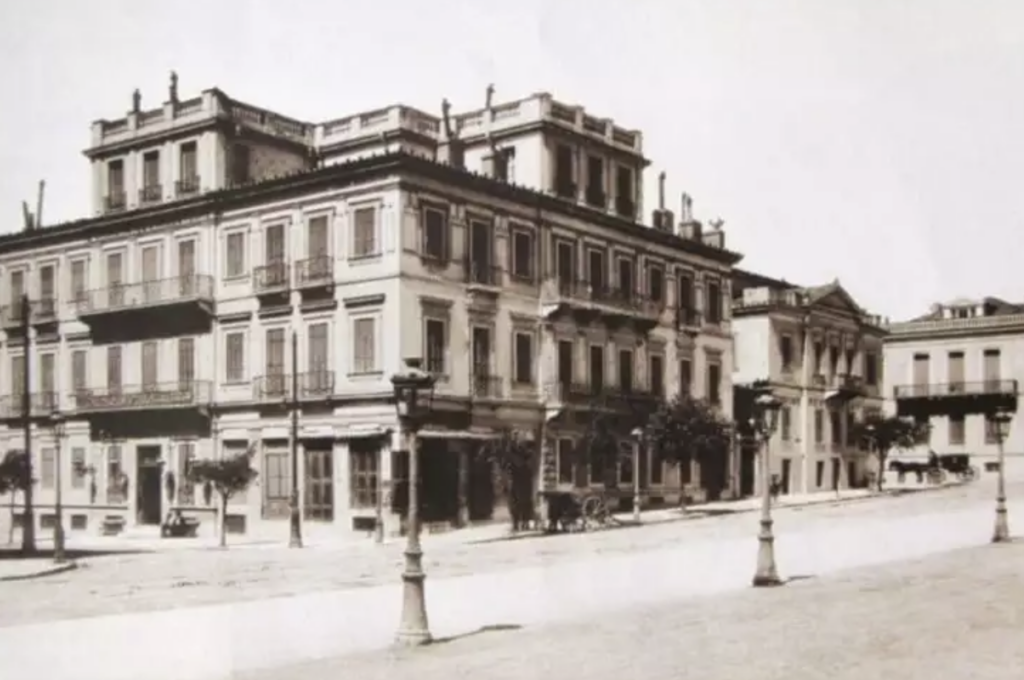
Step back into Athens Greece in 1900—a city caught between its legendary ancient past and the dawn of modern Europe. Just four years after hosting the first modern Olympics in 1896, Athens was no longer the sleepy Ottoman village of the 1830s.
With a population hovering around 120,000–167,000 (depending on whether you count the greater urban area), it buzzed with ambition, horse-drawn trams clattering over cobblestones, and the eternal silhouette of the Acropolis watching over everything. Imagine arriving by steamer at Piraeus and riding a rattling carriage up to the capital. The air smells of olive oil, fresh bread, and distant sea salt.
This is historical Athens at the turn of the century—a vibrant, gritty, hopeful place where neoclassical marble gleams beside whitewashed Ottoman houses, and the dreams of a young nation collide with 2,500 years of glory.
The Eternal Acropolis: Ancient Glory Over a Growing City
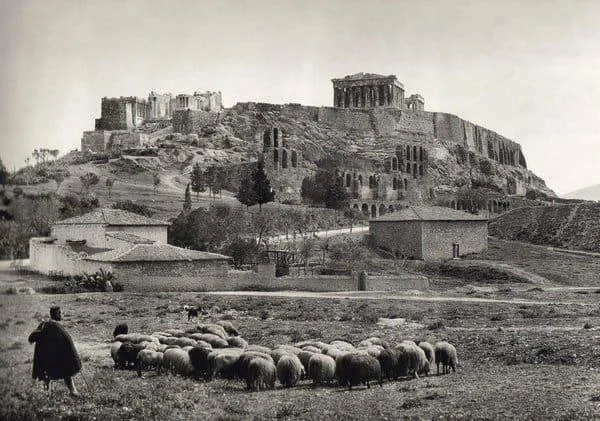
No visit to Athens in 1900 was complete without climbing the Acropolis. The Parthenon—still battered but majestic—dominated every skyline view. Tourists in straw hats and long skirts posed among the ruins, while local shepherds grazed goats nearby. From the hill, you’d see a low-rise city of terracotta roofs stretching toward Mount Lycabettus, with the new neoclassical gems rising proudly: the Academy of Athens, the National Library, and the University of Athens, all designed to echo Pericles’ golden age.
The Acropolis wasn’t just a tourist spot—it was the city’s beating heart. On clear days, the Temple of Olympian Zeus and the Tower of the Winds framed everyday life below, reminding every Athenian that they lived in the cradle of Western civilization.
Daily Life on the Streets: From Plaka Markets to Syntagma Square
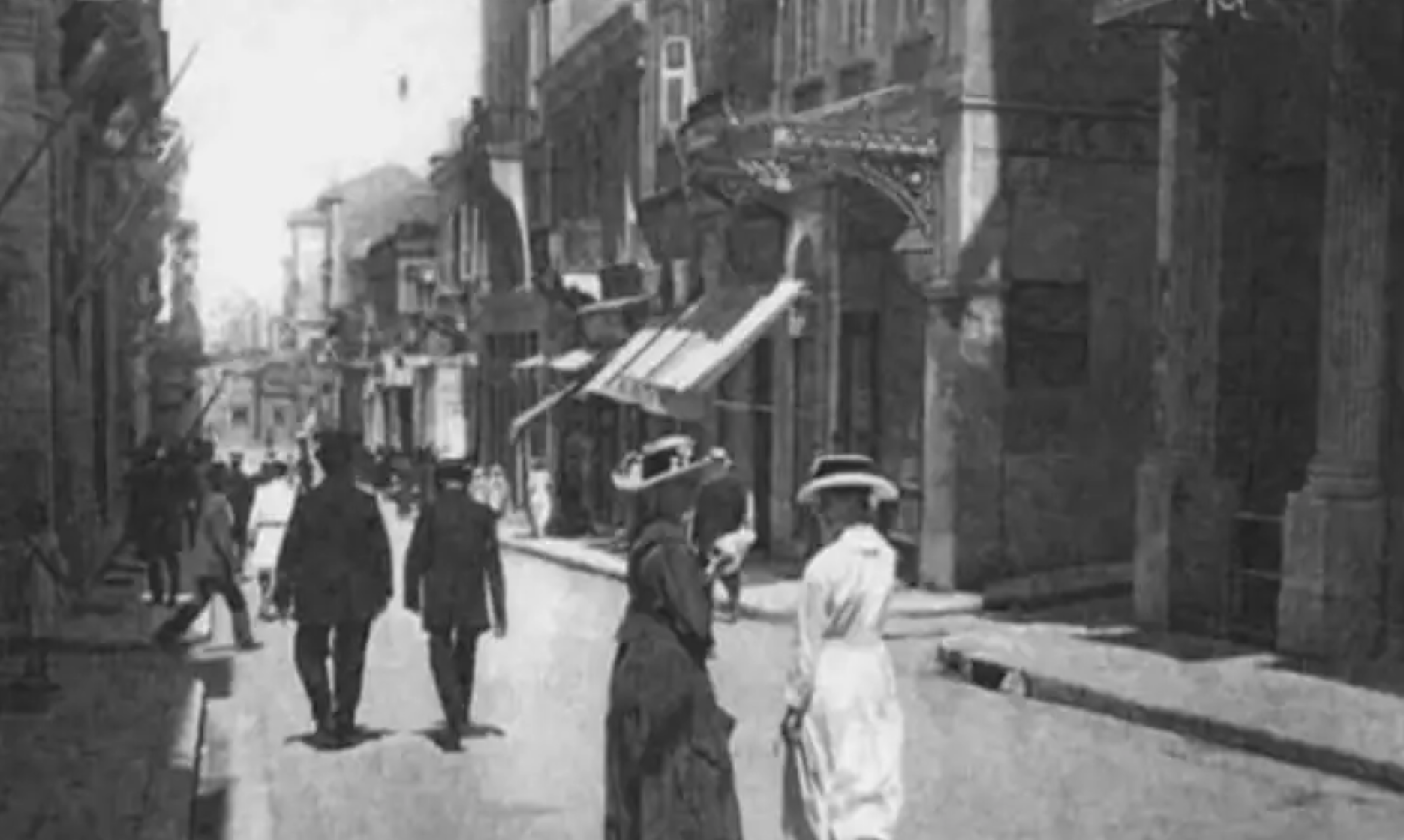
Wander into the Plaka district—the old heart of Athens Greece 1900—and you’d hear vendors shouting in Greek, the clink of coffee cups, and the occasional donkey bray. Narrow lanes wound between whitewashed houses with wooden balconies and blooming bougainvillea.
Men in fezzes or traditional vests sipped ouzo in shady tavernas while women in long skirts carried baskets of fresh figs and olives from the morning market.
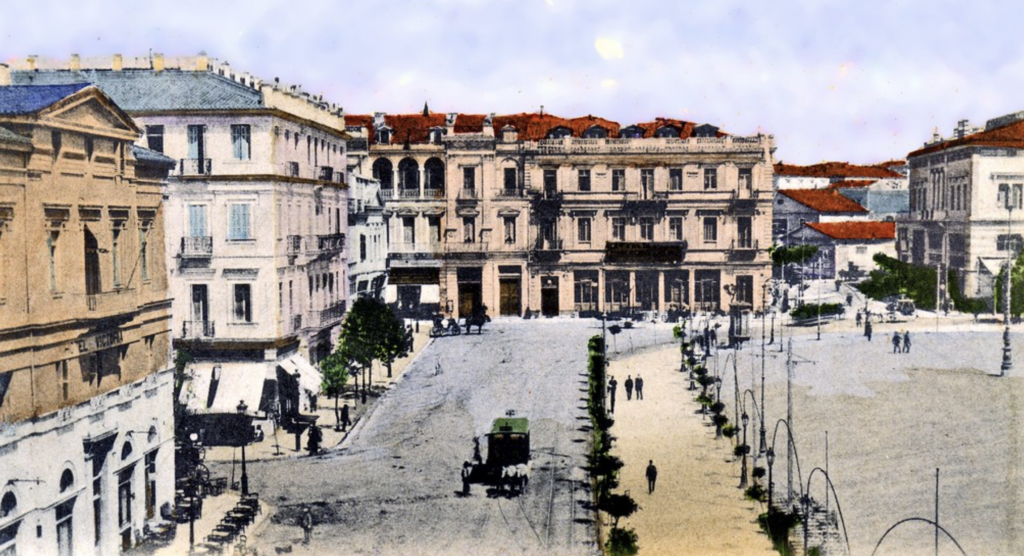
Head to Syntagma Square (Constitution Square) and you’d find a different scene. In 1900 it still looked more like a grand field than the paved heart of a capital, but horse-drawn carriages and the occasional early automobile rolled past the Old Royal Palace (today’s Parliament building).
Locals gathered under the shade trees, reading newspapers or debating politics. Street scenes from Ermou Street and Panepistimiou Avenue showed elegant neoclassical facades, gas lamps, and pedestrians in Edwardian-style dress mingling with traditional Greek outfits.
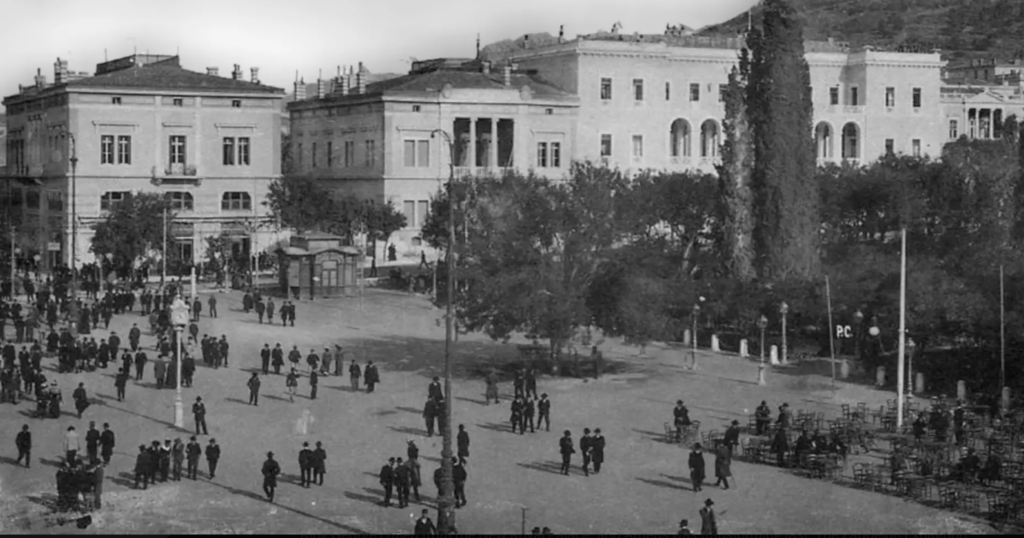
Paving of major roads kicked off in earnest around 1902 under Mayor Spyros Merkouris, but in 1900 many avenues were still dusty. Horse trams (running since 1882) connected the city, and the first telephones arrived in 1908—modernity was coming, but slowly.
Pro tip for history lovers: If you’re researching Athens at the turn of the 20th century, these street-level glimpses reveal a city that felt both provincial and proudly European—cafés overflowing with intellectuals, cobblers hammering shoes, and construction crews building the future.
Modernization Meets Tradition: Neoclassical Charm and Urban Growth
King George I ruled from the New Royal Palace, and Athens was transforming fast. The Zappeion Exhibition Hall (opened 1888) hosted events that drew crowds, while the National Gardens offered green respite. Wealthy families moved into elegant neoclassical mansions along Vasilissis Sofias Avenue, but many working-class Athenians still lived in simple huts on the outskirts.
The economy thrived on trade, cottage industries, silk factories, and a construction boom fueled by the post-Olympics glow. Remittances from Greek emigrants helped, and the city was becoming Greece’s undisputed commercial and cultural hub.
Yet contrasts defined life in Athens 1900: electricity was new and uneven, indoor plumbing rare in poorer quarters, and the scent of woodsmoke mixed with the dust of building sites. Orthodox church bells rang out alongside the calls of street sellers. It was a city of hope—Greece had only been independent for 70 years, and Athenians were determined to prove their ancient blood still flowed strong.
Culture, Society, and the Olympic Afterglow
The 1896 Olympics had put Athens on the world map, and by 1900 the city still buzzed with pride. Athletes and visitors had left behind a taste for international flair—cafés served French-style pastries next to traditional loukoumades. Theater thrived, shadow-puppet Karagiozis shows entertained crowds, and the National Archaeological Museum displayed treasures that drew scholars from across Europe.Society was family-centered and deeply Orthodox. Women managed households while men worked trades or government jobs. Education expanded, literacy rose, and the University of Athens trained the next generation of leaders. Politics simmered—debates about the “Great Idea” (uniting all Greeks) filled newspapers—but daily life remained grounded in simple pleasures: Sunday promenades, Easter feasts, and summer evenings under the stars with the Acropolis glowing above.
Why Athens in 1900 Still Captivates Us TodayHistorical Athens 1900 was a city in transition—proud of its ruins, excited for its future, and full of the energy that would soon explode into the 20th century. The low-rise, sun-drenched streets, the blend of marble and mud-brick, the mix of tradition and ambition… it was Greece finding its modern voice while never forgetting its ancient soul.
Next time you visit modern Athens, look past the traffic and glass towers. Close your eyes on the Acropolis and you can almost hear the clop of hooves, smell the souvlaki, and feel the same Mediterranean sun that warmed Athenians in 1900.Whether you’re a history buff searching “Athens Greece in 1900” or planning a trip to see the real thing, this era reminds us: the spirit of the city that birthed democracy, philosophy, and the Olympics never really left. It just got a fresh coat of neoclassical paint—and a whole lot more stories to tell.
Like our articles? Check out our other stories on GlobalGreeks.com by click here.