

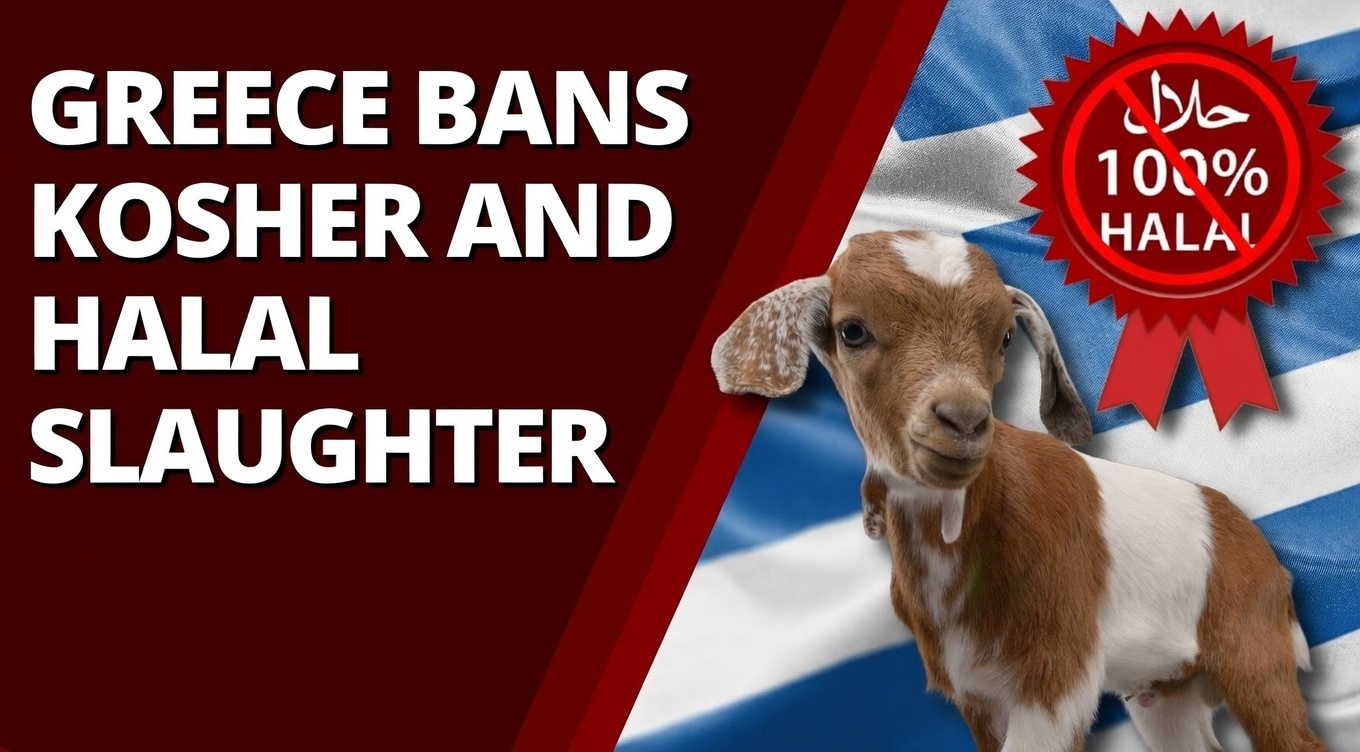
In a significant ruling that has sparked widespread discussion, Greece’s highest administrative court, the Hellenic Council of State, has effectively prohibited the practice of slaughtering animals without prior stunning for religious purposes.
This decision annulled a previous ministerial exemption that had allowed kosher (shechita) and halal (dhabihah) methods to proceed without anesthesia. The court emphasized that protecting animals from unnecessary suffering must take priority, marking a clear shift toward stricter animal welfare standards in the country. This move aligns Greece with several other European nations that have restricted or banned non-stunned slaughter in recent years.
The core of the court’s reasoning rests on scientific evidence regarding animal pain and distress. Traditional kosher and halal slaughter methods involve cutting the throat while the animal remains conscious, which can lead to a delayed loss of consciousness and extended periods of fear and discomfort. In contrast, modern pre-stunning techniques render animals insensible almost immediately, minimizing suffering.
The Hellenic Council of State determined that any religious considerations do not sufficiently justify overriding these welfare protections, effectively deeming non-stunned practices incompatible with current Greek law on humane killing in slaughterhouses.This landmark decision originated from a challenge brought by animal welfare organizations, which argued that the 2017 exemption violated existing regulations requiring stunning.
The court agreed, stating that the balance between religious freedoms and animal rights had not been properly maintained. While it left room for lawmakers to explore solutions—such as regulated post-cut stunning or other compromises—the ruling has practically halted domestic non-stunned ritual slaughter. Imports of certified kosher or halal meat from abroad remain an option for observant communities, helping to address concerns about religious access.
Greece’s approach highlights a broader European trend where animal welfare increasingly influences food production laws. Nations like Belgium, Denmark, and Sweden have implemented similar restrictions, often upheld by EU courts as compatible with religious freedom when proportionate measures are in place. In Greece, the focus remains on reducing avoidable pain during the slaughter process, reflecting evolving societal values that prioritize ethical treatment of animals alongside cultural respect.
For Greece, this ruling reinforces its commitment to humane standards in agriculture and food systems. It sends a powerful message that progress in animal welfare can coexist with diversity, provided adaptations are made where possible—such as reversible stunning methods accepted by some religious authorities.
As debates continue on balancing tradition with compassion, Greece stands as an example of prioritizing evidence-based protections for living creatures in modern society.Ultimately, decisions like this encourage ongoing dialogue about ethics in food production. By placing animal suffering at the forefront, Greece has taken a principled step that could inspire further improvements across Europe and beyond, ensuring that meat reaches tables with the least possible harm inflicted.