
Are the Greek Wildfires Being Done on Purpose?
Suspicion Falls on Illegal Migrants, Government-Linked Land Sales to Foreigners, and Directed Energy Weapons
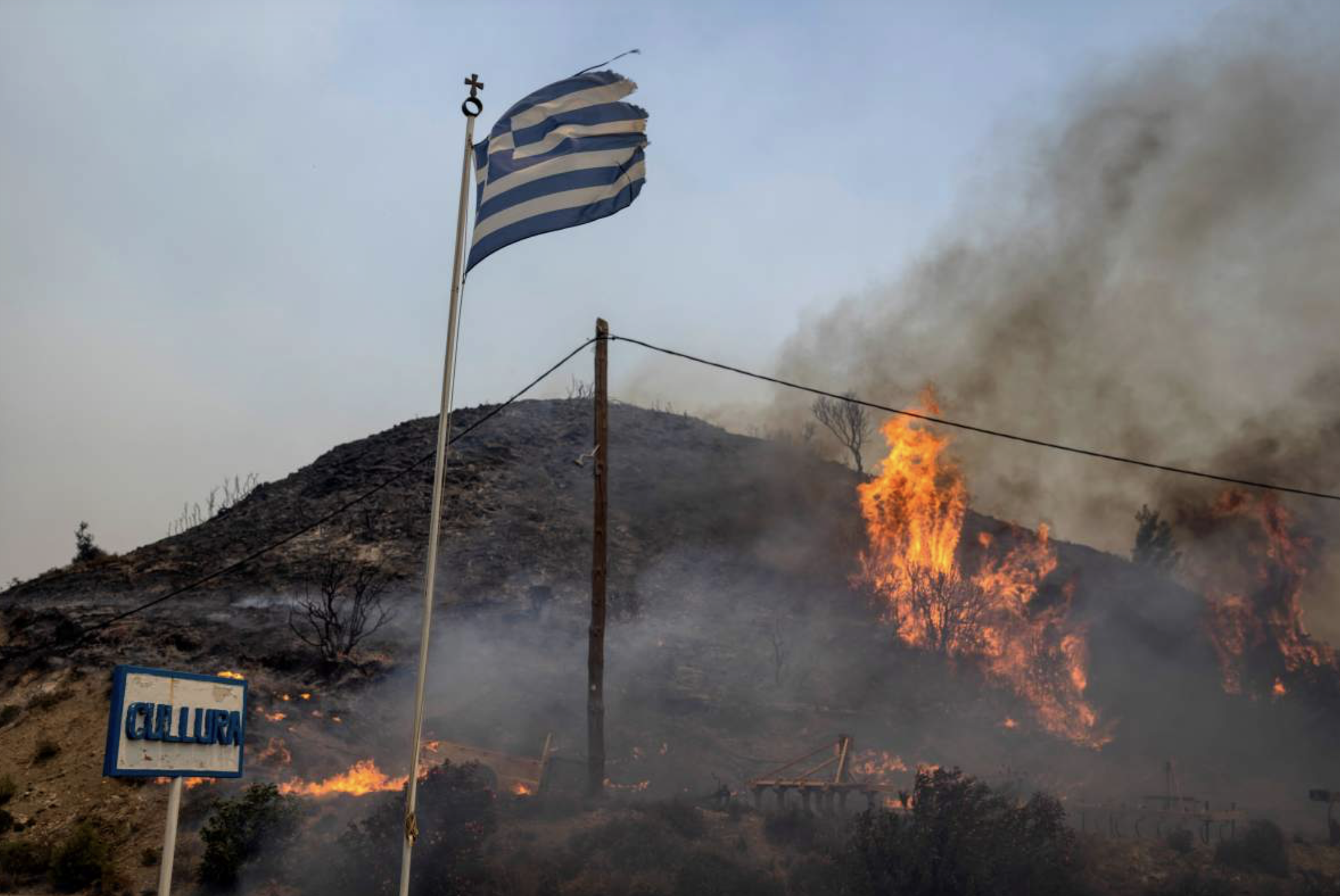
Greece’s summers are once again defined by raging infernos, choking smoke, and heartbreaking loss. The 2025 fire season torched swathes of Chios, Crete, Evros, and mainland areas near Athens and Patras. While heatwaves and drought provide the conditions, many locals and observers insist the real question is darker: Are powerful actors deliberately igniting or amplifying these blazes?
Leading theories point to illegal migrants starting fires along border routes due to viral videos shared on the Global Greeks Instagram page.
Can it be government entities or connected insiders clearing protected land for lucrative sales to foreign buyers?
How about advanced Directed Energy Weapons (DEWs) as a high-tech tool for precision destruction?
We need to have an honest talk about these possibilities.
Migrant Arson Along the Borders: Diversion or Deliberate Sabotage?
The Evros region, a primary illegal migration corridor from Turkey, repeatedly sees fires erupt in heavily trafficked forest areas.
- In 2023’s massive blazes, Greek Prime Minister Kyriakos Mitsotakis noted it was “almost certain” many fires were human-caused and started along migrant routes. Far-right voices and locals accused “foreign arsonists” of coordinated acts.
- Arrests and investigations have included non-Greeks in some cases. Videos and eyewitness accounts describe groups in forests near ignition points. Skeptics argue desperate migrants might light fires for distraction, warmth, or path-clearing amid police pushbacks.
While mainstream sources often call this scapegoating, the geographic overlap with migration surges keeps the theory prominent among Greeks strained by record arrivals.
Government Complicity and Land Sales to Foreigners: Burn, Reclassify, Profit
A deeper suspicion targets domestic profiteering. Greek law long banned construction in forested zones, but burned land can be reclassified, unlocking development potential in prime tourist areas.
- Post-fire redevelopment pressures are real. Historical cases (e.g., after 2007 fires) linked arsons to land-clearing for building. In recent seasons, burned zones on islands and the mainland have seen proposals for hotels, villas, or renewable projects.
- Critics allege political insiders, developers, or lax oversight facilitate this. With Greece’s tourism economy and past debt-driven asset sales, cleared scenic land becomes highly sellable to wealthy foreigners — Gulf investors, Europeans, or others seeking second homes.
- Rural depopulation and weak enforcement amplify perceptions of impunity. Promises of reforestation often lag while construction permits appear in ashes.
This creates a clear incentive: a “natural” disaster clears hurdles that bureaucracy otherwise protects.The DEW Angle: High-Tech Precision or Fringe Speculation?
Adding fuel to the fire is talk of Directed Energy Weapons — focused laser, microwave, or electromagnetic systems capable of starting or intensifying blazes from afar with minimal visible trace. While DEW technology exists in military research (lasers for drone defense, etc.), conspiracy circles claim it’s being tested or deployed covertly in Greece and elsewhere to enable land grabs or other agendas without obvious arson evidence.
- Anomalies cited include unusually rapid fire spread, selective destruction (homes vs. certain vegetation), or ignition patterns hard to explain by ground sparks alone. Similar theories exploded after U.S. fires in Hawaii and California.
- In Greece, echoes appeared after the deadly 2018 Mati fires, with at least one public figure (linked to Athens water authority) floating energy weapons as a possible cause. Fringe analysts extend this to recent seasons, suggesting foreign or elite interests could use satellite/airborne platforms for “clean” clearing ahead of development.
Experts universally dismiss DEWs as impractical for widespread wildfire causation due to power requirements, visibility issues, and lack of forensic proof. No official Greek investigations support it. Still, in an era of advancing military tech and distrust of authorities, the idea persists as an explanation for fires that seem too convenient, too precise, or too devastating.
Balancing the Theories with Harsh Realities
Arson remains a documented plague in Greece — over 90% of fires are human-caused, with hundreds investigated yearly for negligence or intent. Climate change undeniably worsens the backdrop: extreme heat, drought, and winds turn any spark catastrophic. The migrant, land-sale, and DEW narratives thrive because they address visible incentives and patterns: overwhelmed borders, post-fire building booms, and occasional “impossible” fire behaviors.
Whether opportunistic criminals, systemic profiteering, desperate migrants, or something more technologically advanced, the repeated summer tragedies erode trust.Greece needs accountability: fortified borders, ironclad anti-arson laws with swift prosecutions, mandatory rapid reforestation, transparent land-use rules blocking post-fire speculation, and open investigations into every major ignition. Without them, suspicion will only grow.What do you believe is driving Greece’s fire crisis — migration pressures, insider land deals, advanced weapons, or a dangerous mix?
Share evidence-based thoughts below as the country braces for future seasons.
Visit www.GlobalGreeks.com for more info.